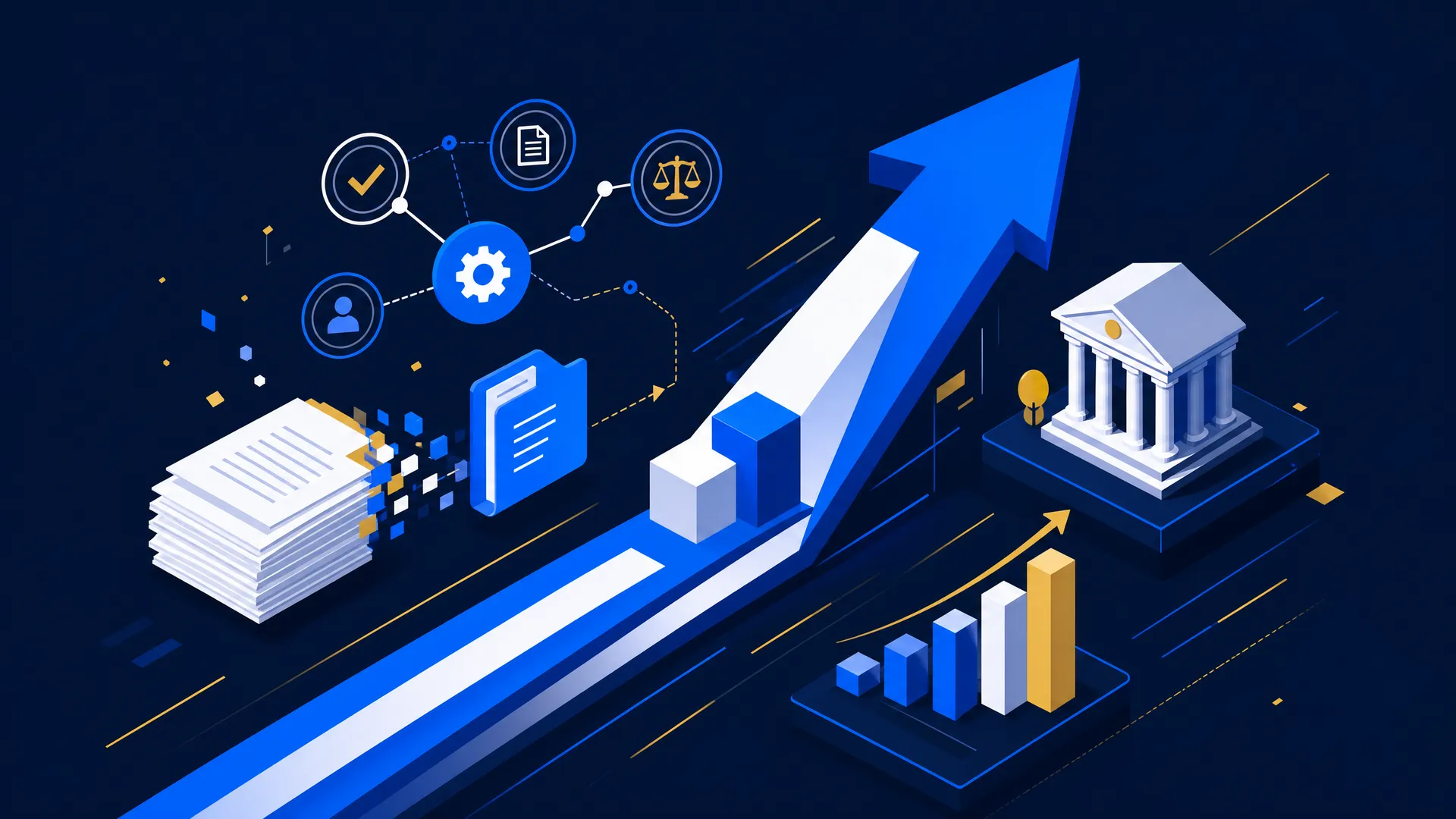
Artificial intelligence has become one of the most talked about topics in the legal industry. For HOA and community association law firms, however, the conversation isn’t about replacing attorneys or staff, it’s about improving efficiency.
As collections volumes grow and client expectations increase, firms are looking for ways to reduce administrative work, improve accuracy, and gain better visibility into their operations. That’s where AI is beginning to make an impact.
What AI Means for HOA Law Firms
When people hear “AI,” they often think of content generation tools or futuristic technology. In reality, AI is most valuable when it helps streamline everyday workflows.
For HOA Law Firms, that can include:
- Organizing and validating data
- Supporting document preparation
- Identifying workflow bottlenecks
- Improving reporting and operational insights
- Enhancing communication and collaboration
Rather than replacing legal professionals, AI helps firms work more efficiently with the information they already have.
Why Firms Are Paying Attention
HOA collections involve a high volume of accounts, documents, communications, and deadlines. Even small inefficiencies can create delays and increase administrative workload.
A typical collections process includes:
- Account referrals from community managers
- File creation and intake
- Document generation
- Case management
- Client communication
- Reporting and resolution
As firms grow, managing these processes manually becomes increasingly difficult. AI offers opportunities to improve efficiency throughout the workflow.
Improving Data Accuracy
Collections workflows depend on accurate information. Missing account details or incomplete records can slow down file creation and case progression.
Challenge: Errors and inconsistencies in account data create delays and increase manual review time.
Modern Approach: AI-assisted validation tools can help identify inconsistencies and missing information early, reducing errors and minimizing manual review.
Supporting Document Generation
Demand letters, notices, and other collections documents are essential, but often repetitive to prepare.
Challenge: Repetitive document preparation consumes valuable time and increases the risk of inconsistencies.
Modern Approach: When combined with automation, AI can help improve consistency, reduce manual effort, and accelerate document preparation while maintaining firm standards.
Enhancing Reporting & Visibility
Many firms have access to data but struggle to turn it into actionable insights.
Challenge: Limited visibility into collections performance makes it difficult to identify bottlenecks and make informed decisions.
Modern Approach: AI can help identify trends in collections performance, uncover workflow bottlenecks, and provide greater visibility into operations, allowing firms to make more informed decisions.
Streamlining Communication
Community managers, boards, attorneys, and staff all need access to timely information.
Challenge: Coordinating updates across multiple stakeholders creates administrative overhead and delays.
Modern Approach: AI can help organize communications, summarize updates, and support faster responses, reducing administrative workload while improving transparency.
Common Misconceptions About AI
Despite growing interest, several misconceptions remain.
AI won’t replace legal professionals. Legal expertise, client relationships, and strategic decision-making remain firmly in the hands of attorneys and legal staff.
AI isn’t only for large firms. In fact, smaller firms often benefit significantly because even modest efficiency gains can have a meaningful operational impact.
AI works best alongside automation and integrations. The greatest value comes from combining AI with connected systems and streamlined workflows.
Looking Ahead
The future of HOA collections isn’t about AI alone. It’s about creating smarter, more efficient workflows through a combination of automation, integrations, centralized case management, and AI-driven insights. Firms that embrace these technologies will be better positioned to handle increasing caseloads, improve operational efficiency, and deliver a better client experience.
AI is quickly becoming a practical tool for HOA law firms looking to reduce manual work and improve operational efficiency. By leveraging AI alongside automation and software integrations, firms can streamline collections workflows, improve visibility, and focus more of their time on high-value legal work.
That’s where Anva comes in. Built specifically for HOA and community association law firms, Anva helps firms modernize operations through automation, reporting, integrations like AnvaSync, and intelligent workflow management.
Ready to see Anva in action?
Contact Anva today to schedule a demo and see the difference.